
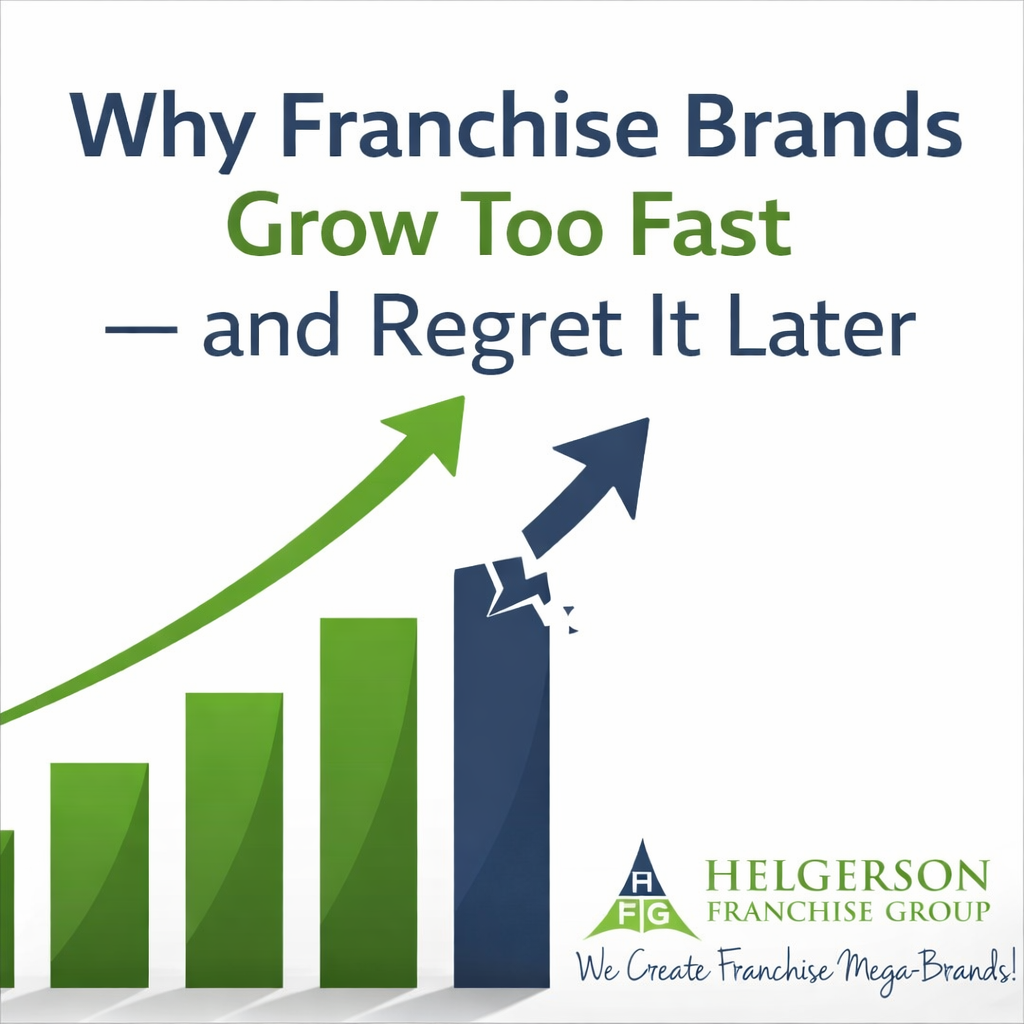
In franchising, growth is exciting.
New territories sold. New locations opening. Press releases celebrating expansion.
From the outside, it looks like success.
But inside many franchise systems, something very different is happening.
Support teams are stretched thin. Franchisees are struggling to follow the model. Brand standards begin to slip. And the franchisor suddenly realizes that the system isn’t as strong as the growth chart suggests.
The uncomfortable truth is this:
Many franchise brands grow too fast — and end up paying for it later.
The goal of franchising should never be selling the most units possible. The goal should be building a network of successful operators who strengthen the brand over time.
Here are the biggest reasons fast growth can backfire — and what smart franchisors do differently.
1. Selling Units Becomes the Priority Instead of Building Operators
Once a brand begins franchising, momentum builds quickly. Development teams are hired. Brokers and consultants bring candidates. Conferences focus on expansion goals.
Suddenly, the pressure shifts toward how many units can be sold this quarter.
But franchise success isn’t determined by how many agreements are signed.
It’s determined by how well franchisees perform once they open their doors.
When the focus becomes selling units instead of selecting the right operators, systems start to experience:
- underperforming locations
- franchisees who struggle operationally
- inconsistent customer experiences
Great brands prioritize operator quality over sales volume.
2. The Cost of the Wrong Franchisee Is Massive
One of the most underestimated risks in franchising is the wrong franchisee.
A poor franchisee fit doesn’t just affect one location — it impacts the entire system.
The wrong operator can create:
- operational problems
- brand reputation damage
- conflict with the franchisor
- legal disputes
- negative validation for future candidates
A single failing location can influence dozens of future prospects during validation calls.
Strong franchisors understand that every franchisee is a long-term partner, not just a sale.
3. Support Infrastructure Can’t Keep Up
Franchise systems often grow faster than their support teams.
When this happens, franchisees begin to feel it immediately.
Training becomes rushed. Field support becomes reactive instead of proactive. Marketing resources become limited.
And franchisees who invested significant capital start asking an important question:
“Where is the support we were promised?”
The most successful franchise brands build infrastructure ahead of growth, including:
- operations support teams
- marketing resources
- onboarding systems
- training programs
- franchisee communication systems
Without these foundations, growth becomes fragile.
4. Territory Expansion Outpaces Brand Strength
Rapid expansion can also stretch a brand geographically before it is truly ready.
New markets require:
- localized marketing strategies
- regional support
- supply chain consistency
- brand awareness
If the system expands faster than its ability to support those markets, early franchisees may struggle to gain traction.
And when early franchisees struggle, development momentum often stalls.
Sustainable expansion requires strategic territory planning, not just available buyers.
5. Validation Becomes a Problem
Prospective franchisees almost always perform validation calls with existing operators.
Those conversations are often the most influential part of the decision-making process.
If franchisees feel supported and profitable, the system grows naturally.
But if franchisees feel overwhelmed, unsupported, or disappointed, candidates quickly sense it.
Growth built on strong franchisee validation is sustainable.
Growth built on aggressive unit sales rarely is.
What Sustainable Franchise Growth Looks Like
The most respected franchise brands in the industry take a different approach.
They focus on:
- carefully selecting the right franchisees
- building operational infrastructure
- strengthening franchisee profitability
- creating strong validation within the system
In other words, they focus on quality before quantity.
Because a franchise system built on successful operators will always grow faster — and stronger — in the long run.
Final Thought
Franchising isn’t just about expansion.
It’s about building a network of entrepreneurs who represent your brand every day in their communities.
When franchise brands focus on selling units instead of developing great operators, growth may look impressive for a while.
But the strongest franchise systems understand something simple:
Sustainable growth comes from great franchisees — not just more franchisees.
Thinking About Growing Your Franchise Brand?
If you’re a franchise brand evaluating your development strategy, the most important question isn’t how fast you can grow.
It’s how well your system is built to support that growth.
If you’d like to discuss strategies for attracting the right franchisees and building sustainable expansion, I’d be happy to connect.